Jude Bellingham Avoids Red Card For Banned Gesture vs Ghana - Here's Why
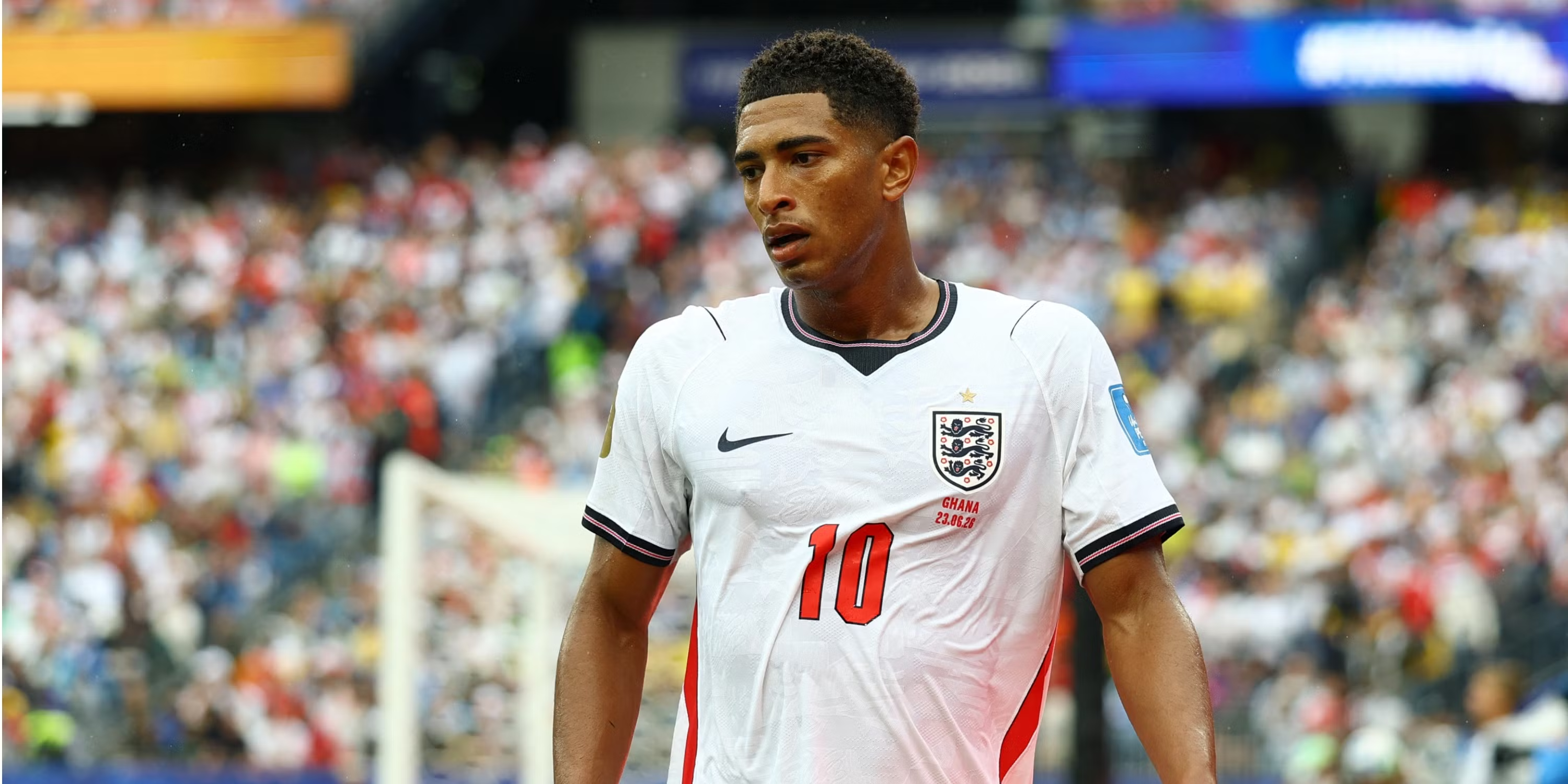
England's Jude Bellingham avoided a red card despite making a gesture that's been banned by FIFA during the World Cup match vs Ghana…
Writing has always been Josh's way of expressing his deep enthusiasm for sports, and this new path allows him to bring a fresh and honest perspective to his work.
He also gains valuable experience as a volunteer match reporter for the Loughborough Foxes WFC. Covering live events has helped Josh improve his storytelling skills and given him a closer insight into the game. Sign in to your GiveMeSport account England laboured to a disappointing goalless draw with Ghana in their second World Cup fixture, failing to register a shot on target for almost an hour.
The closest the Three Lions came arrived late on, when Nico O'Reilly's close-range header cannoned off the crossbar and Harry Kane's follow-up was smashed high into the stands.
At half-time, Jude Bellingham was involved in a foul-mouthed altercation with the Ghanaian bench, drawing Carlos Queiroz into the confrontation, with the Ghana boss later claiming the midfielder's choice of language created "more tension" between the two camps.
Ghana boss Carlos Queiroz explains why he was angry with England's Jude Bellingham at the 2026 World Cup
Bellingham was also at the centre of a separate issue that went largely unnoticed amid the chaos and the goalless affair: a question over whether he should have been sent off.
While the half-time spat with Queiroz drew most of the attention, it was a quieter exchange with Ghana forward Jordan Ayew that carried the greater risk for Bellingham.
Cameras caught the midfielder speaking to Ayew while covering his mouth, a gesture FIFA has specifically targeted under new rules introduced for this tournament.
New rules have been approved and announced.
Referees can now dismiss players for hiding their mouth during exchanges, a measure brought in following the fallout from Gianluca Prestianni's six-match ban for homophobic language directed at Vinicius Junior during a Champions League tie in February.
Paraguay's Miguel Almiron already felt the force of the new law this tournament, when he was sent off against Turkey after VAR flagged the gesture to the referee. Bellingham avoided the same fate because his exchange with Ayew was not deemed confrontational.
A nation that has produced a lot of talent, we look at England's greatest 11 of the 21st century.
The rule only applies when the gesture accompanies a hostile interaction, meaning Ayew’s lack of a reaction likely kept Bellingham on the pitch, whereas Turkey’s Mert Mulder made an immediate beeline for the referee.
FIFA referees committee chairman Pierluigi Collina addressed the law before the tournament began, making clear the intent behind the crackdown.
“If the conversation is friendly, they can continue to do it without any problem. When the conversation is confrontational, covering the mouth means that you are doing something very wrong, potentially, and the sanction is the red card."
Had officials viewed the moment differently, England would have been without one of their talismans for this weekend's pivotal Group L finale, leaving Thomas Tuchel's side to wonder just how close they came to a damaging twist on top of an already frustrating night in Boston.
Continue with Matchday Global
Source: GiveMeSport
More stories
Goretzka back in fashion as Juventus discuss Thuram and Kolo Muani with PSG
Bayern’s Stance and a Calibrated Denial: The Olise Saga Explained
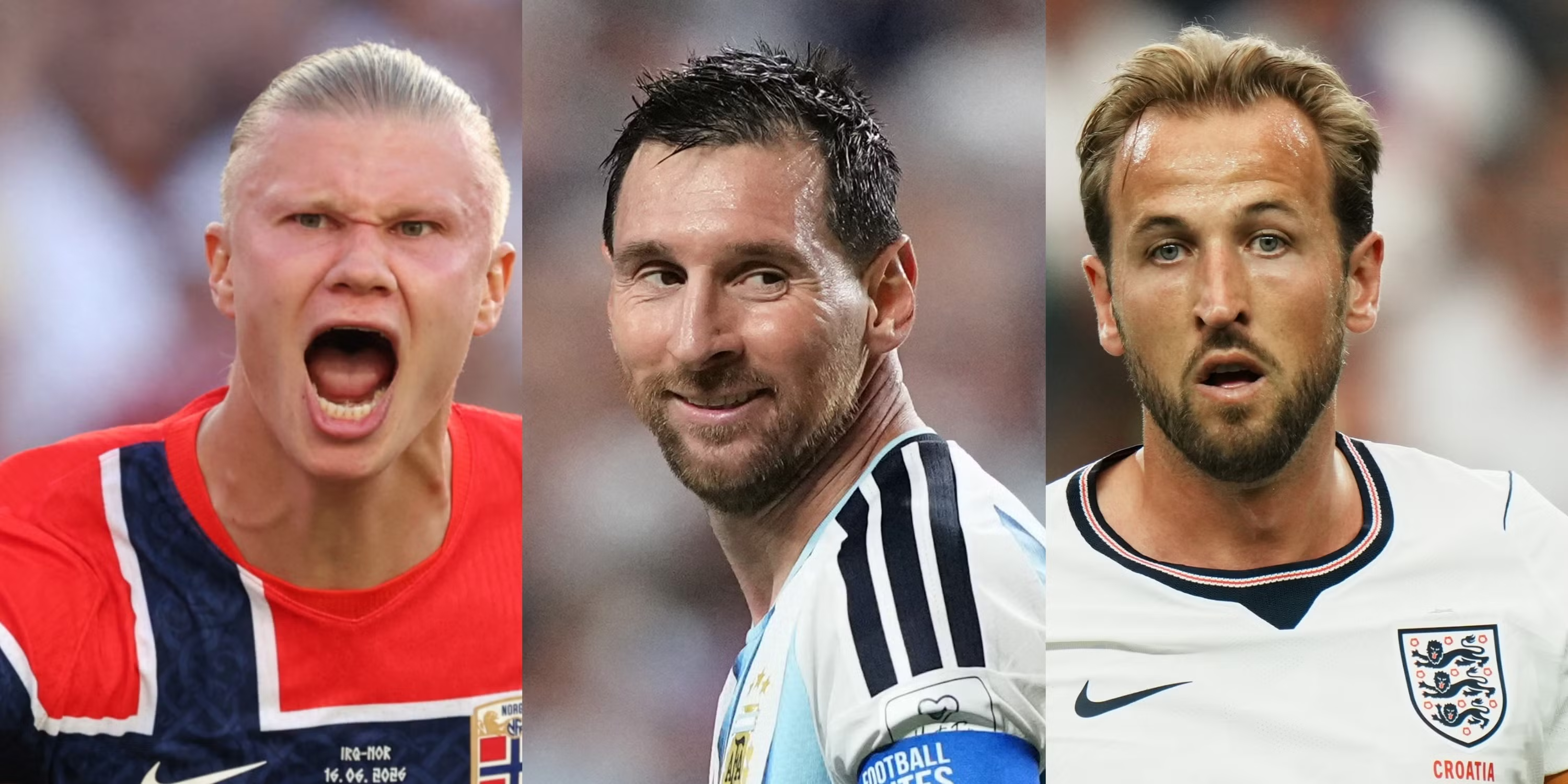
World Cup 2026 Top Scorers: Players with Most Goals in Race for Golden Boot