Lekjaa: Morocco’s AFCON success was earned, not favored
Nearly five months after Morocco’s victory over Senegal in the AFCON 2025 final, controversy surrounding the match continues to fuel debate. Accused by some Senegalese officials of benefiting from favorable treatment, Royal Moroccan Football Federation President Fouzi Lekjaa has now publicly defended the tournament’s organization and the legitimacy of Morocco’s title. Speaking on the program […] The post Lekjaa: Morocco’s AFCON success was earned, not favored appeared first on HESPRESS English - Morocco News.
Nearly five months after Morocco’s victory over Senegal in the AFCON 2025 final, controversy surrounding the match continues to fuel debate.
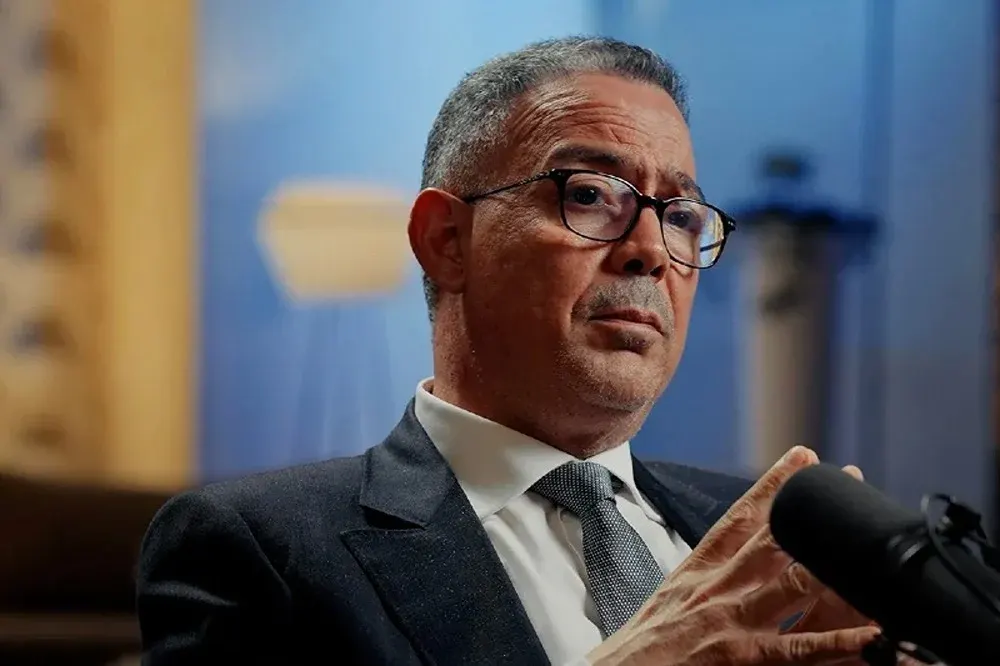
Accused by some Senegalese officials of benefiting from favorable treatment, Royal Moroccan Football Federation President Fouzi Lekjaa has now publicly defended the tournament’s organization and the legitimacy of Morocco’s title.
Speaking on the program “Magharib,” broadcast on Al Jazeera 360, Lekjaa responded point by point to criticism directed at Morocco, the federation and the tournament organizing committee.
Lekjaa dismissed suggestions that Morocco benefited from refereeing decisions.
“If Morocco had benefited from refereeing favoritism, we would not have waited until the 90th minute to make the difference,” he said. “And does a team that cheats reach the semifinals through a penalty shootout?”
One of the main complaints raised by Senegal’s delegation concerned accommodation and training facilities provided ahead of the final in Rabat.
Lekjaa said all hotel assignments and training centers had been determined long before the identities of the finalists were known. According to him, the arrangements were part of a detailed plan approved before the tournament began.
He noted that Senegal had been based in Tangier throughout the competition and had access to its own training center. The move to Rabat for the final required a change in accommodation and facilities, in line with the tournament’s organizational framework.
“The Senegalese team went to the hotel assigned to it but indicated that it did not wish to stay there,” Lekjaa said. “We then coordinated with the organizing committee to provide another hotel.”
He added that Senegal also declined the training facility initially allocated to it despite the site covering 30 hectares and featuring more than 30 pitches.
“We made all available training grounds in Rabat accessible so the team could choose the one it preferred, and it ultimately selected the field where it wished to train,” he said.
To illustrate that such logistical arrangements are common in major tournaments, Lekjaa pointed to the ongoing 2026 FIFA World Cup.
“The Moroccan team is currently staying in New Jersey. Since its second match is in Boston, it will spend the night before the game in a temporary hotel away from its base camp. This is standard practice in major international competitions,” he said.
Another source of controversy was the large presence of Moroccan supporters and complaints from Senegalese fans regarding ticket availability.
Lekjaa argued that the issue was amplified after the Senegalese Football Federation published details of the team’s arrival in Rabat two days before the final, prompting significant public mobilization.
Regarding ticket sales, he noted that tickets had been placed on sale by the Confederation of African Football months before the tournament began.
“Would it be logical, if Morocco reached a World Cup final and tickets were sold out, for me to ask FIFA for 50,000 additional tickets?” he said.
He added that Moroccan organizers nevertheless allocated an additional quota to the Senegalese delegation, including 5% of the stadium’s total capacity for Senegalese supporters.
The most disputed moment of the final remains the penalty awarded to Morocco in the closing minutes of the match.
For Lekjaa, the decision triggered an excessive reaction from the Senegalese camp.
“I have never seen, during my career, a team leave the field in protest against a refereeing decision,” he said.
According to him, the match had unfolded in a highly competitive atmosphere until tensions escalated in the final moments.
Lekjaa argued that psychological pressure contributed to behavior he considered contrary to the spirit of the game, while praising Moroccan supporters for their conduct.
“I challenge all experts around the world. If the action in the 90th minute was not a valid penalty, I am prepared to renounce this title and the entire competition,” he said.
He also described comments made by Senegal coach Pape Thiaw as falling outside the sporting framework.
Despite the controversy, Lekjaa emphasized the strength of ties between Morocco and Senegal.
“There is no dispute. The historical relations between our two countries go far beyond football,” he said. “They are based on a deep strategic, historical and human heritage that cannot be called into question.”
He revealed that the president of the Senegalese Football Federation visited the Mohammed VI Football Complex and sports facilities in Tangier shortly after taking office.
Lekjaa also cited praise from FIFA President Gianni Infantino for the Grand Stadium of Tangier.
“Neither the Royal Moroccan Football Federation nor the organizing committee ever received any negative remarks from the Senegalese delegation,” he said.
Lekjaa concluded by framing the final within Morocco’s broader ambition to host major international sporting events.
He said the tensions that followed the match should not overshadow what he described as the overall success of the tournament and the positive feedback Morocco received internationally.
“We organized matches despite rainfall reaching 88 millimeters. Yet games were played in excellent conditions thanks to modern infrastructure and logistics developed entirely in Morocco,” he said.
He ended with a final assessment of the controversy: “The international image Morocco projected through its facilities and professionalism created difficulties for those accustomed to more modest organizational standards.”
Continue with Matchday Global
Source: Hespress