Lekjaa: Morocco’s football rise is rooted in long-term national strategy
Fouzi Lekjaa said Morocco’s football transformation is part of a broader national development strategy led by Mohammed VI, emphasizing that the country’s ambitions now extend beyond participation to competing for major international titles. Speaking to French magazine Onze Mondial, Lekjaa reflected on the evolution of Moroccan football over the past decade, highlighting reforms in youth […] The post Lekjaa: Morocco’s football rise is rooted in long-term national strategy appeared first on HESPRESS English - Morocco News.
Fouzi Lekjaa said Morocco’s football transformation is part of a broader national development strategy led by Mohammed VI, emphasizing that the country’s ambitions now extend beyond participation to competing for major international titles.
Speaking to French magazine Onze Mondial, Lekjaa reflected on the evolution of Moroccan football over the past decade, highlighting reforms in youth development, governance, infrastructure and international competitiveness.
Lekjaa said the foundations of Morocco’s football rise predate his appointment as head of the Royal Moroccan Football Federation in 2014.
“Things did not begin in 2014 with my presidency of the federation,” he said. “They go back to a broader development model led by His Majesty the King, in which youth occupy a central place as a key driver of development.”
He described sport — particularly football — as a core pillar of that national roadmap, shaped through national sports conferences focused on professionalism, governance and infrastructure modernization.
Lekjaa stressed that youth development remained the central objective behind the federation’s programs, pointing to study-sport initiatives that allow thousands of Moroccan boys and girls to combine football training with formal education.
He identified the Mohammed VI Football Academy as the true starting point of Morocco’s football transformation, saying the country’s run to the semifinals of the 2022 FIFA World Cup validated years of structural work.
“The real transformation began with the inauguration of the Mohammed VI Academy,” Lekjaa said. “Then the World Cup in Qatar confirmed that we were on the right path and capable of competing at the highest levels.”
According to Lekjaa, Morocco’s ambitions have now fundamentally changed.
“We are no longer satisfied with participation,” he said. “Today we are operating with the mentality of winning titles and consistently proving ourselves at the highest level.”
On youth development, Lekjaa said the federation identified a major gap in player formation between the ages of 10 and 17, prompting the adoption of a three-part model involving the federation, the national technical directorate and football clubs.
Under the framework, the federation defines the overall structure, the technical directorate supervises coaching and clubs oversee implementation through a clear financial and organizational system.
Lekjaa also said Morocco’s recent performances at senior and youth international tournaments reflect deep structural progress in the national football ecosystem.
“Reaching the World Cup semifinals has become a benchmark for all our national teams,” he said, adding that even defeats against teams such as Brazil in youth competitions are now viewed internally as disappointing results, evidence, he argued, of rising expectations.
Addressing criticism over Morocco’s growing influence within African football institutions, Lekjaa rejected suggestions that the country’s expanding role within Confederation of African Football was problematic.
“There are always rumors and comments, and then there is reality,” he said. “For decades Morocco was absent from CAF governance structures. It has only recently regained an active place consistent with its position and contribution to African football.”
He added that Morocco’s objective is to help drive African football forward rather than preserve stagnation.
Continue with Matchday Global
Source: Hespress
More stories

Kane on Barcelona shortlist - Saturday's gossip
Zazzaroni backs Allegri as ‘perfect’ Napoli coach & Mancini ‘99% certain’ for Italy CT job
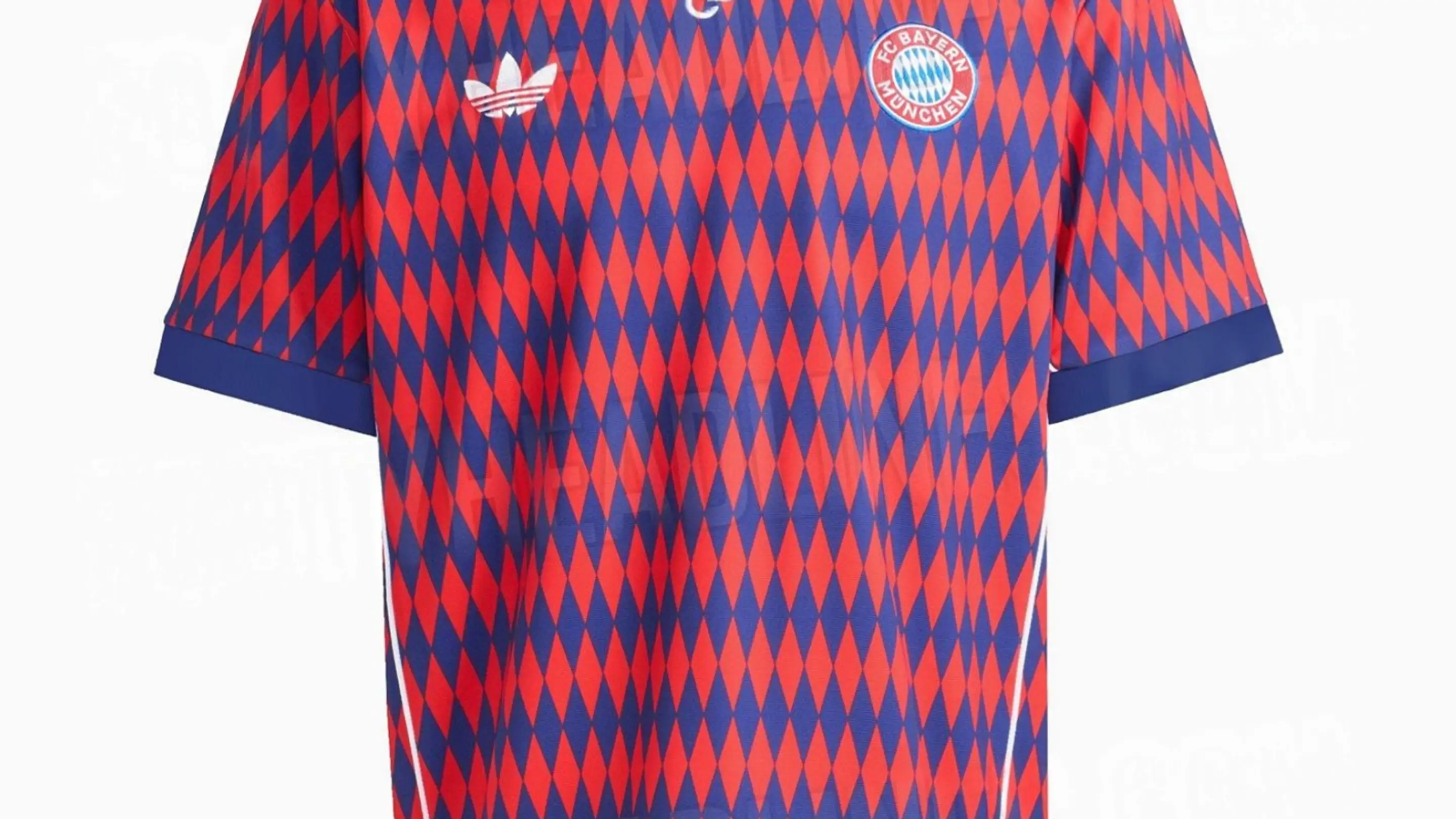
Bayern Munich 2026 retro kit leaks - and it’s another classy adidas stunner