Morocco climbs to 6th in FIFA rankings: How does the ranking system work?
Morocco climbed to 6th in the FIFA men’s world rankings, the highest position in the country’s football history, after Portugal was held to a 1-1 draw by the Democratic Republic of Congo in its opening Group K match at the 2026 FIFA World Cup. The draw resulted in Portugal losing 12.76 ranking points, allowing Morocco, […] The post Morocco climbs to 6th in FIFA rankings: How does the ranking system work? appeared first on HESPRESS English - Morocco News.
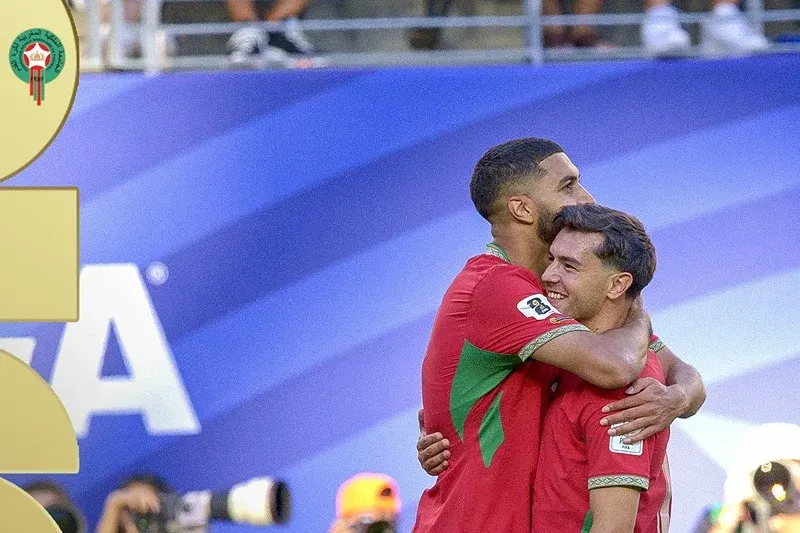
Morocco climbed to 6th in the FIFA men’s world rankings, the highest position in the country’s football history, after Portugal was held to a 1-1 draw by the Democratic Republic of Congo in its opening Group K match at the 2026 FIFA World Cup.
The draw resulted in Portugal losing 12.76 ranking points, allowing Morocco, with 1,755.62 points, to move up into sixth place.
How FIFA rankings are calculated:
The FIFA Men’s World Rankings, introduced in 1992 to show the order of national football teams, are used to compare teams and help decide seedings for tournaments like the World Cup.
Since 2018, FIFA has used a points system that updates after each match, based on an Elo-style method also used in chess.
The Elo method adds or subtracts points after each match instead of averaging them.
The points gained or lost depend on the strength of the opponent and the match result, with stronger teams expected to perform better against lower-ranked sides.
In FIFA’s system, not all matches carry the same weight.
Friendlies count less than competitive games, while World Cup matches are given more importance.
Knockout games are weighted more than group-stage matches, and losses in knockout rounds are not included in the calculation.
FIFA uses this equation to calculate ranking points for each match: P = Pbefore + I × (W − We)
“P before” refers to a team’s points before a match, while “P” is the updated total after the game.
“W” represents the result, which gives 1 for a win, 0.5 for a draw, and 0 for a loss, and “We” is the expected outcome based on the rating gap between the two teams.
“I” reflects match importance, ranging from 5 for low-weight friendlies played outside the International Match Calendar to 60 for FIFA World Cup matches from the quarterfinal stage onwards.
Why are FIFA rankings so important?
FIFA rankings directly affect competition paths in international football.
They determine World Cup seeding, with higher-ranked teams placed in stronger pots and often drawn into more favorable group-stage paths.
They also shape continental qualification draws, affecting the difficulty of a team’s route to major tournaments.
Higher-ranked nations are more likely to attract stronger friendly opponents, giving them more opportunities to earn points and maintain their position.
For lower-ranked teams, strong results against higher-ranked opposition can significantly improve their standing and increase their chances of qualifying for major competitions.
Beyond seeding and tournament draws, FIFA rankings also affect how teams are seen globally.
Higher positions bring more recognition, stronger national pride, and more visibility for players on the international stage.
They can also help attract more fan support, media attention, and commercial interest, including sponsorship and funding.
Continue with Matchday Global
Source: Hespress
More stories

Rashford officially returns to Man Utd as Barcelona buy option expires
Declan Rice: Calafiori ‘one of my best friends, Italy an amazing country’

Newcastle have clear Anthony Gordon succession plan after England win vs Croatia
