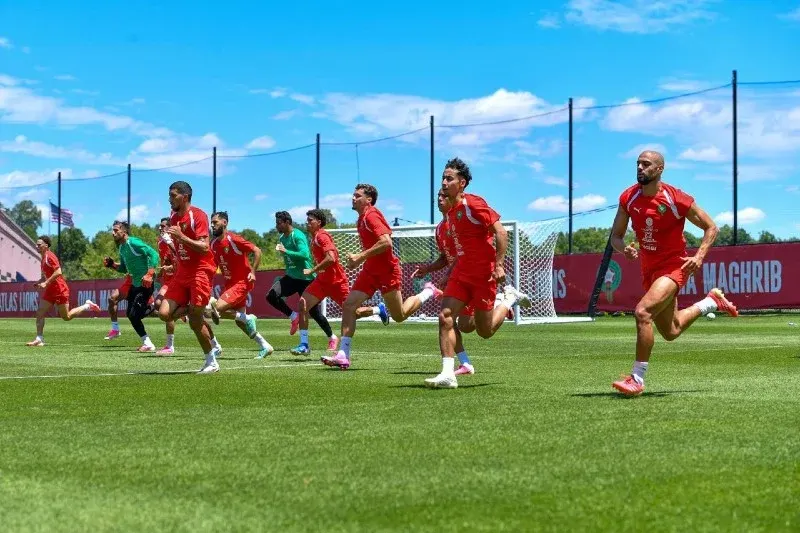
Morocco eye group lead as Haiti match shapes possible knockout route
Morocco enter their final World Cup group match against Haiti with qualification almost within reach, but the bigger question is now strategic. The Atlas Lions are not only looking for a place in the Round of 32. They are also trying to finish first in their group and avoid a more complicated knockout path. Ahead […] The post Morocco eye group lead as Haiti match shapes possible knockout route appeared first on HESPRESS English - Morocco News.
Morocco enter their final World Cup group match against Haiti with qualification almost within reach, but the bigger question is now strategic. The Atlas Lions are not only looking for a place in the Round of 32. They are also trying to finish first in their group and avoid a more complicated knockout path.
Ahead of Wednesday’s match in Atlanta, Morocco sit level with Brazil on four points after a 1-1 draw against the Seleção and a 1-0 win over Scotland. Brazil currently hold the advantage on goal difference after beating Haiti 3-0, meaning Morocco must defeat Haiti and wait for the result of Brazil’s match against Scotland to know whether first place is possible.
The match against Haiti therefore carries two dimensions. On paper, Morocco are favorites against a side already eliminated from the tournament. In practice, however, the game remains important because the final ranking of the group will directly shape Morocco’s first knockout opponent.
According to FIFA’s Round of 32 bracket, the winner of Group C will face the runner-up of Group F, while the runner-up of Group C will face the winner of Group F. This makes Morocco’s final position especially important, as Group F includes the Netherlands, Japan, Sweden and Tunisia.
Sports critic Tarek Taliani told Hespress that if Morocco finish first, the expected scenario could lead to a match against Japan. If the Atlas Lions finish second, the path may become more difficult, with the Netherlands seen as a possible opponent.
His reading reflects the current balance in Group F as the Netherlands and Japan both entered the final round in strong positions, while Sweden remain dangerous because of their attacking quality.
Japan have shown discipline and balance after drawing with the Netherlands and beating Tunisia 4-0, while Sweden have displayed both strength and fragility, scoring heavily against Tunisia before suffering a heavy defeat against the Dutch.
For Morocco, topping the group would not guarantee an easy match, but it could offer a more manageable route than finishing second. Japan remain a technically strong and well organized side, while the Netherlands would represent a heavier challenge because of their physicality, attacking depth and experience in knockout level stages.
Ouahbi has sought to keep Morocco focused on the immediate task against Haiti, rather than on possible knockout-stage opponents. While several scenarios have been discussed, the Moroccan coach made clear that they are not shaping the team’s preparation.
“There is talk we might play next against the Netherlands, but it could also be Japan, but even then France or Argentina, but it is not anything we are taking into consideration,” he said in the pre-game conference, stressing instead the need for the Atlas Lions to first secure the result they need in Atlanta. He also warned that Haiti, despite already being eliminated, would remain motivated to fight for their first points of the tournament.
Ouahbi also warned that although the Caribbean side have already been knocked out after defeats to Scotland and Brazil, they still have something to play for. Haiti are looking for their first points of the tournament and want to end their World Cup return with dignity, especially in what will be captain Johny Placide’s final international match.
That warning matters because Morocco’s main issue so far has not been control of matches, but efficiency. The Atlas Lions impressed against Scotland, completing 601 passes, the highest total recorded by an African team in a World Cup match since records began in 1966. They also showed tactical maturity and defensive discipline. But their two goals in two matches have raised questions about whether their dominance is being converted into enough chances and goals.
Ismael Saibari has carried much of the attacking weight, scoring against Brazil and then again after just 71 seconds against Scotland. Brahim Diaz, Ayyoub Bouaddi and the Moroccan midfield have helped the team control rhythm and possession, but Morocco will need more attacking variety as the tournament moves into the knockout phase.
Morocco are expected to win, but the performance will also show whether the team can impose itself against an opponent likely to defend deeply and play with emotional motivation. Haiti may approach the match with the same fighting spirit often seen from underdog teams on the World Cup stage, including the determination Morocco showed during their historic run in Qatar in 2022.
Continue with Matchday Global
Source: Hespress
More stories
Tchouaméni or Camavinga: How Madrid Plan to Unlock the Olise Deal
Ancelotti makes decision on Neymar role and has options to replace Raphinha

Maarten Martens one of four managers Hearts are 'interviewing': 'I've been hearing...'