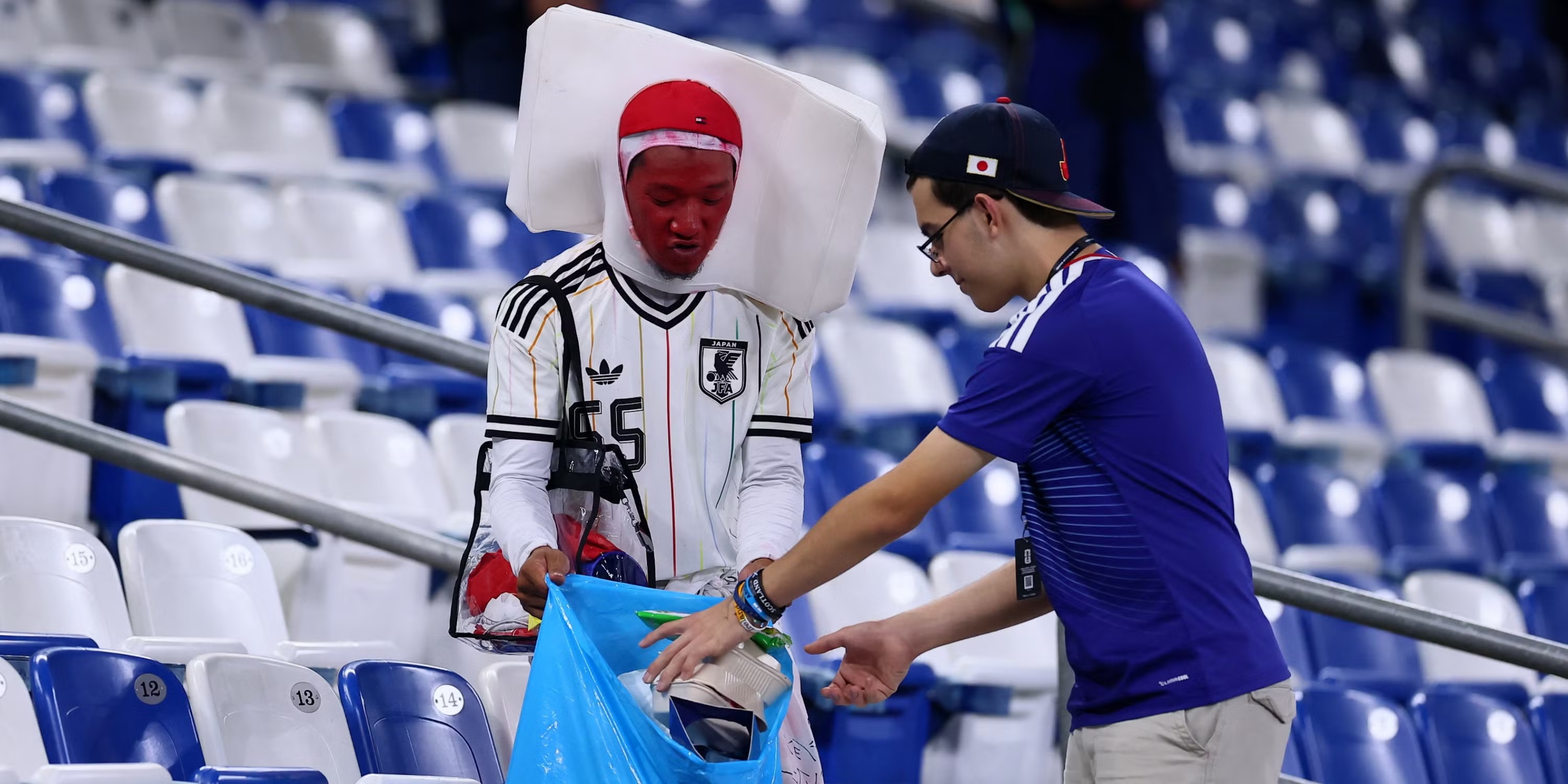
Why Japan Fans Clean Up the Stadium After Soccer Games
Japan are winning fans both on the field and in the stands at the 2026 World Cup...
His work has been published in the London Magazine, Last Word On Sports, Star & Crescent, and Hello Student, as well as his award-winning online publication Vendor, which he solely founded in 2016.
Outside of GIVEMESPORT, Jordan works part-time and in freelance roles in social research and education. He is currently a Visiting Lecturer in Media, Journalism, and Communications at the Polytechnic University of the Philippines, the country's largest state university. He previously lectured in Creative Writing at the University of Portsmouth.
Jordan follows a wide range of sports, but his passions lie in professional wrestling, football, F1, and middle and long-distance running. Sign in to your GiveMeSport account They may not be seeking recognition, but the Japan supporters have earned the respect of the international football community through their respectful behaviour at major tournaments and matches. The 2026 World Cup is no different, as the Japanese fans have once again been tidying up football stadiums before they leave the venue.
Unfinished food and empty wrappers often line the stands of vacated football stadiums beyond the final whistle. But if Japan are competing, the stadium staff can breathe a sigh of relief knowing that the Asian side's supporters will be on hand to provide assistance.
The Japanese fans proved once again that their impressive cultural manners were not for attention or a part of some flash-in-the-pan viral trend. Following their 2-2 draw with the Netherlands, the supporters were steadfast in their litter-picking duties at the Dallas Stadium.
Japan were seen using an unusual tactic during their opening 2026 World Cup match against the Netherlands
And this also extended to the national players. It was reported that upon leaving the stadium, the Japanese squad had neatly left their rubbish in the centre of the changing room alongside their used towels.
But why are the Japanese players and fans so intent on leaving the stadiums in the same state of cleanliness as they found them?
This now common sight extends from a behaviour that is taught in the Japanese school system. And it extends from a well-known phrase in Japanese culture: "Tatsu tori ato wo nigosazu."
When translated into English, it means "A bird leaves nothing behind." In Japan, schoolchildren are taught to clean their school classrooms and corridors. As a result of these behaviours being ingrained in childhood, they become habits that are carried into adulthood.
Japan-based journalist Scott McIntyre during an interview with the BBC, expanded on this cultural trait, noting that it's not just a sporting aspect, but a part of Japanese culture as a whole. "It's not just part of the football culture but part of Japanese culture," said McIntyre.
"You often hear people say that football is a reflection of culture. An important aspect of Japanese society is making sure that everything is absolutely clean and that's the case in all sporting events and certainly also in football."
This cultural behaviour was first brought to international attention at the 1998 World Cup in France, the site of Japan's debut in the competition. And despite losing all three group stage games and exiting the tournament early, the Japanese supporters were still willing to leave the stadium as they found it.
And more admirable still, the Japanese fans made headlines once again at the Qatar World Cup in 2022. Despite their team even playing in the fixture, the Japanese supporters were on hand to tidy up the stadium following the tournament opener between Qatar and Ecuador.
As well as other World Cup tournaments, the travelling Japanese have been seen lending a hand at the Olympics and the Asian Cup. And England fans would've witnessed it firsthand earlier this year, following Japan's upset victory over the Three Lions at Wembley Stadium.
And the behaviour seems to have become infectious at the 2026 World Cup.
Following their group stage fixture against the Netherlands, the Japanese fan clean-up crew were assisted by New York Giants quarterback Jameis Winston in their efforts. Winston was spotted in a Japan jersey after the game with a blue bin bag collecting rubbish.
"For Japanese people, this is just a normal thing to do," said Hajime Moriyasu to The Athletic at the 2022 World Cup. "When you leave a place, you have to leave it cleaner than it was before."
However, it has also left some Japanese men open to criticism. A viral social media post, which has gained 60,000 likes on X, depicted the double standards of domestic life and public life in Japan. The post suggests that whilst it's great that Japanese fans are doing their service in public, Japanese men are falling short at home, leaving a burden of domestic housework to their partners.
And with cleanliness and respect running so deep in Japanese culture, it does come as a shock to see such a post gain traction online. In fact, according to 2021 data from the Organisation of Economic Co-operation and Development (OECD), Japanese men rank among the lowest compared to other highly-developed countries when it comes to time devoted to housework.
And whilst this domestic disparity should be addressed, a recent clip of Portuguese fans following Japan's example shows that this behaviour should still be commended.
How John Denver Classic Became USMNT World Cup Anthem
World Cup Hydration Breaks & Reaction Explained
Story of Norway Fans' Brilliant 'Viking Row'
This summer's World Cup is bound to turn the USA, Canada, and Mexico into three of the most fashionable nations on the planet.
Continue with Matchday Global
Source: GiveMeSport
More stories

Arsenal’s Morgan Rogers Push, Liverpool’s Diomande Deadline & Tonali Battle
Liverpool may have inadvertently funded Real Madrid's raid for Alexis Mac Allister

Juventus keep Sorloth waiting: ‘No comment, why?’