Why Players Who Cover Their Mouth Risk Red Card at World Cup
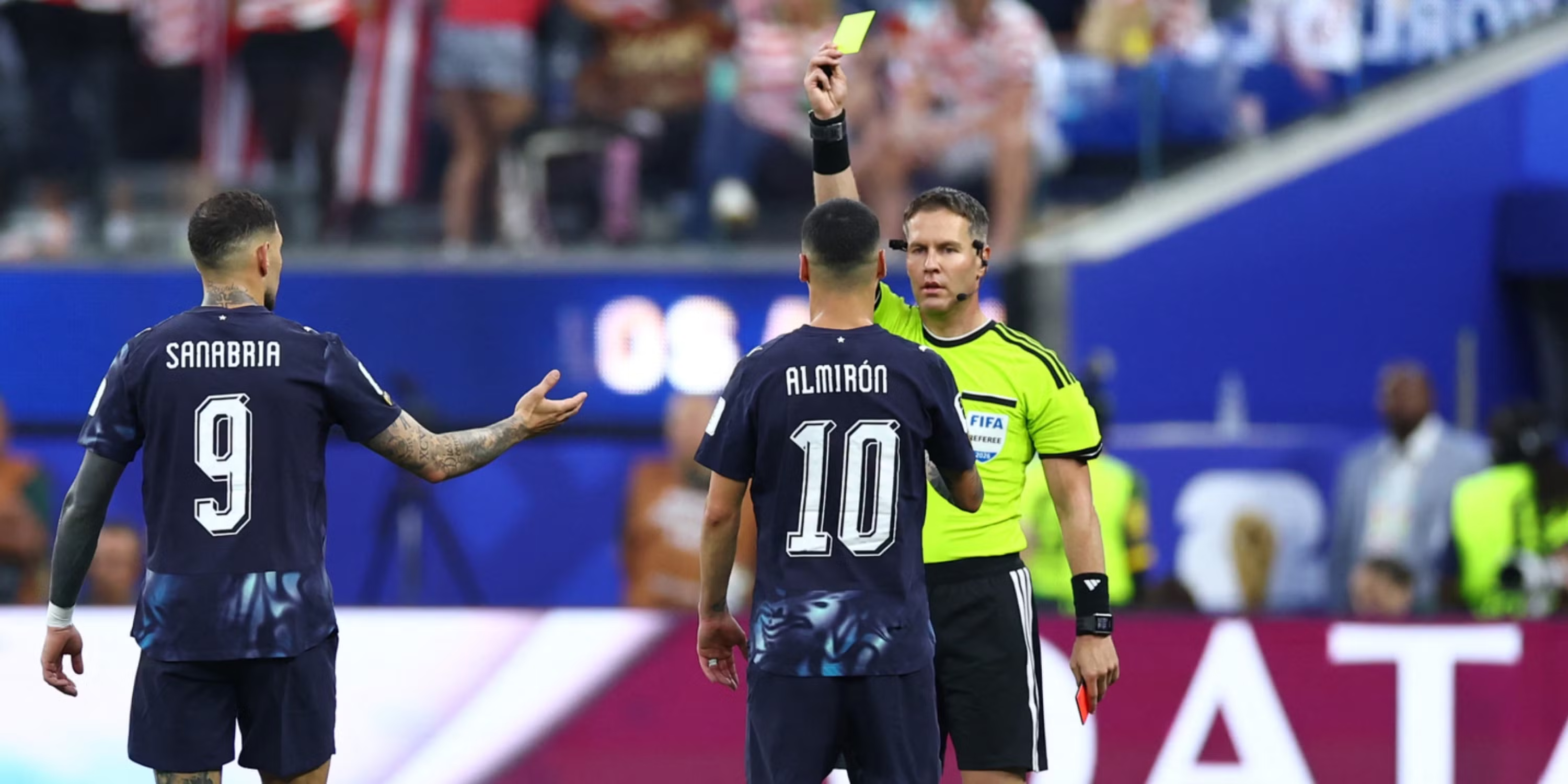
Miguel Almirón became the first player to fall prey to the ruling - but why is FIFA clamping down on players doing this at the 2026 World Cup?
Prior to that, he achieved a 1st Class Sports Journalism MA degree from Liverpool John Moores University whilst simultaneously earning the coveted NCTJ Gold Standard qualification.
Working the likes of The Sporting News, SportBible and 90min helped forge a strong reputation while work across other sports such as Archery, Badminton, Cricket, MMA and Boxing have helped to develop an all-round expertise of being a multimedia sports journalist, as well as displaying a strong versatility in this industry. Sign in to your GiveMeSport account Among the many talking points of the 2026 World Cup lies a controversial new ruling that has already claimed its first victim, covering your mouth during a confrontation with an opponent is now a red card offence.
Just ask Paraguay and former Newcastle United forward Miguel Almirón, who was dismissed against Turkey for doing exactly that. It has divided opinion between fans and pundits alike and has put every player on notice.
The one-match ban is now in effect for the forward and there is no possibility of appealing to overturn the decision.
With that in mind, we're breaking down the new ruling, what it means, other potential incidents and all the key reactions from the fallout of the red card.
The inception of this ruling dates back to early 2026. Following Benfica and Real Madrid's clash in the UEFA Champions League, it was said that a new law, dubbed the 'Prestianni Law', could be introduced after the incident involving Gianluca Prestianni and Vinícius Jr in February.
Whilst that situation was resolved with a six-match ban for the Benfica winger, the International Football Association Board's attentions quickly turned to international football ahead of the World Cup and how best to implement a ruling to avoid such incidents.
IFAB, and FIFA's plan developed into a proposal that would see players sanctioned if they deliberately cover their mouths during a confrontation with an opponent. They described it as closing 'a disciplinary loophole that has complicated investigations in cases involving alleged verbal abuse' and it was approved in late April.
The incident at the World Cup was the first time the rule had been enforced, which was confirmed following a VAR check.
World Cup yellow and red card rules explained, plus list of players who are out of the next match
As it stands, Almirón is the only player to be punished by the rule. However, it doesn't mean there haven't been other incidents that fans have contested during the tournament.
Two star names that include Argentina's Lionel Messi and England's Jude Bellingham have both been subject to interest from fans; Messi against Algeria and Bellingham against Ghana.
Whereas Messi's involved a fellow teammate, Bellingham toed the line more precariously. At halftime during England's clash with Ghana, he was seen in an altercation with the Ghanaian bench and Jordan Ayew but a lack of reaction from the striker perhaps saved the Real Madrid midfielder from further punishment.
According to the statement released by FIFA following Almirón's dismissal, a player will be dismissed in a 'confrontational situation with an opponent', hence why the calm reaction of Ayew, coupled with the halftime whistle, looks to have saved Bellingham from being the second victim of the rule.
FIFA's president, Gianni Infantino, gave his reaction to SNTV following the dismissal of Almiron, saying: "If you have nothing to hide, you don't cover your mouth when you speak to somebody. The rules have been made very clear to everyone, everyone knows them, so this is an important element."
The most emotional reaction thus far came from Paraguayan commentator, Jorge Vera. As a result, he has since officially had his accreditation removed from the tournament. Vera's outburst live on air took aim at referee Ivan Barton, Infantino and CONMEBOL president Alejandro Domínguez, claiming that FIFA had 'killed football' and that the president should be 'ashamed'.
Ahead of their clash with Paraguay, Australian captain Jackson Irvine backed the decision, claiming that all the players were all well-informed about the ruling before the tournament began. "If you’re saying something to someone that you don’t want to be seen, then I think it’s safe to say that if you can’t be seen saying it, then it shouldn’t be said."
England's Dan Burn reflected on the situation and somewhat sympathised with his former teammate, stating that he believes this was something of a 'habit' for the attacker who managed 30 goals in 223 games at St. James Park. "Obviously, I know Miggy [Miguel] personally, so I'd like to think that...I think it's more habit. I've seen him do that a lot over the years.
"It's going to take a little while for some players to get used to that. We had a referees meeting, so everyone knew the rules, so it wasn't a massive surprise. But it's something that's quite hard to get out of the habit of doing."
Lionel Messi has been accused of committing the same offence as Miguel Almiron, who was sent off at the World Cup.
Continue with Matchday Global
Source: GiveMeSport
More stories

Inter turn to Juventus and Premier League options after losing Palestra to Chelsea

FIFA Complaint Threat Deepens Atlético-Barcelona Row Over Julián Álvarez
Goretzka back in fashion as Juventus discuss Thuram and Kolo Muani with PSG