Which Italy World Cup Team Was the Greatest?
Italy has lifted the World Cup four times (in 1934, 1938, 1982, and 2006), which...
Italy has lifted the World Cup four times (in 1934, 1938, 1982, and 2006), which puts the Azzurri among the most successful national teams in the history of the game. Yet the question of which specific squad stands above the rest is one that divides opinion and demands a proper look at each era.
Three generations are worth considering in particular: the 1982 side that redefined what it meant to peak at a major tournament, the 1994 squad that pushed Brazil to the absolute limit in one of the most dramatic finals ever staged, and the 2006 champions who did it against all the odds.
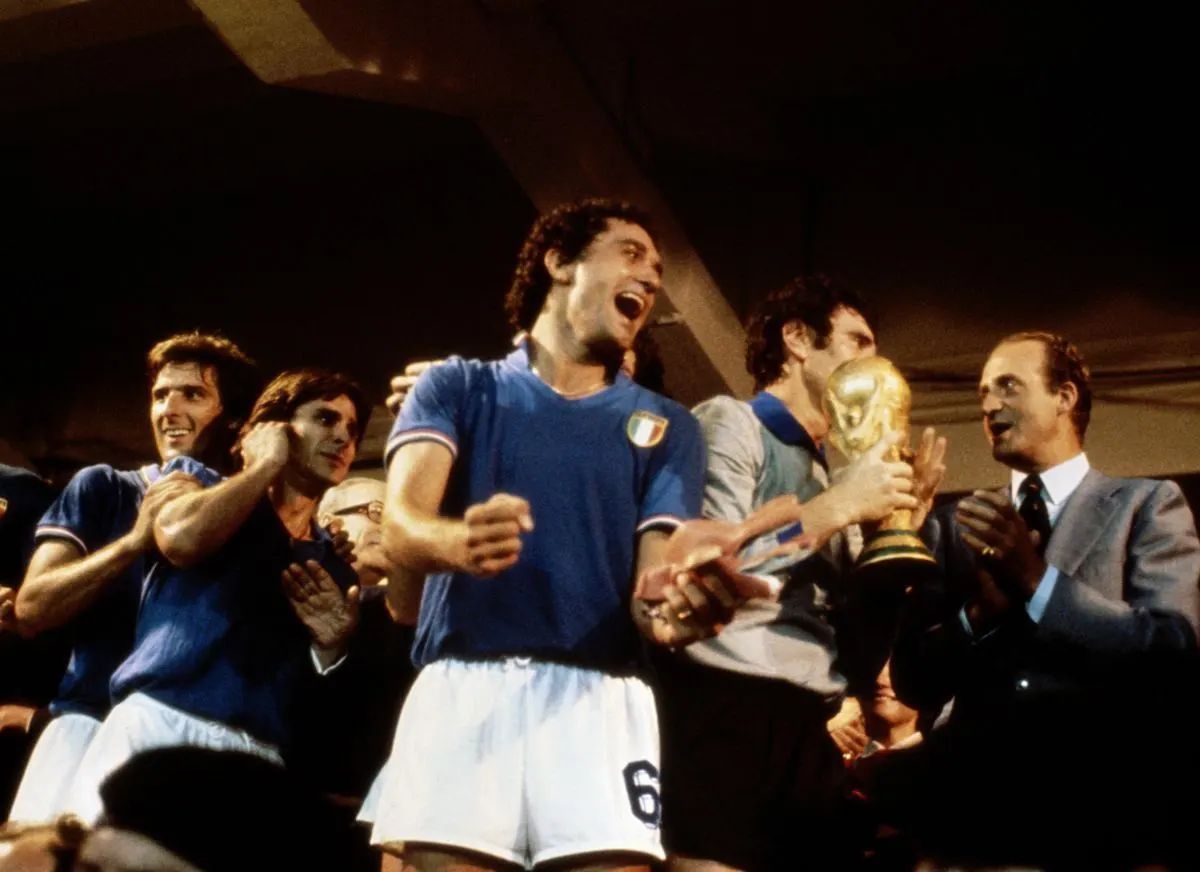
Enzo Bearzot’s squad arrived in Spain that summer under serious pressure. Italy had scraped through the group stage without winning a single match, drawing all three games against Poland, Peru, and Cameroon. The media back home had turned on the team, and striker Paolo Rossi had been scoreless throughout. The atmosphere was one of crisis.
What happened next changed everything. Rossi scored a hat-trick against a Brazil side that many still consider the finest team never to win the World Cup. That match, on 5 July in Barcelona’s Sarrià stadium, is one of the most celebrated in Italian football history. Italy won 3-2, and Rossi went from being a liability to a national hero in the space of 90 minutes.
Beyond Rossi, the squad had real substance. Dino Zoff kept goal with the authority of a man who had been at the very top of the game for two decades. The defensive unit was disciplined and difficult to break down.
What makes 1982 so compelling from a historical standpoint is the psychological dimension. This was a group of players who performed under enormous scrutiny, had their backs turned on them by their own press, and still managed to win the tournament. That kind of mental resilience, combined with genuine tactical organisation and individual quality, is what sets a great team apart from a merely good one.
Arrigo Sacchi brought a completely different philosophy to the 1994 tournament in the United States. Where 1982 was pragmatic and reactive, Sacchi’s Italy was built around shape, pressing, and collective movement.
The squad included some of the finest defensive players in the world at that time (Franco Baresi, Paolo Maldini, and Alessandro Costacurta), all products of the Milan side that had dominated European football in the late 1980s and early 1990s.
Italy’s route to the final was not without difficulty. They needed Roberto Baggio to rescue them on more than one occasion, most notably against Nigeria in the last 16, where he scored an equaliser in injury time before adding a winner in extra time. That ability to find a result when everything was going wrong became the defining characteristic of this squad.
The final itself, played on 17 July at the Rose Bowl in Pasadena, will remain one of the most memorable occasions in the tournament’s long history. Italy faced Brazil in a game that finished 0-0 after 120 minutes of tense, controlled football. Both sides had chances, both goalkeepers made important saves, and both defences held firm.
When it went to penalties, the drama reached a level that few sporting events ever match. Baresi stepped up first for Italy and missed.
Baggio, who had carried the team through the tournament almost single-handedly, was the last man to take a kick. He needed to score to keep Italy in it. He did not. The ball sailed over the crossbar, and Brazil were world champions. The image of Baggio standing with his head bowed as the Brazilian players celebrated around him is one of the most recognisable in football.
Marcello Lippi’s squad arrived in Germany that summer in arguably the worst possible circumstances for any Italian team. The Calciopoli scandal, a match-fixing investigation that had engulfed several major Serie A clubs, had broken weeks before the tournament began.
Players from Juventus, Milan, and Fiorentina were representing a country whose football system was under criminal investigation. The pressure was immense, and the distraction was real.
Despite all of that, Italy produced a tournament performance that was both technically impressive and tactically astute. The defence, led by Fabio Cannavaro, was exceptional throughout.
Andrea Pirlo dictated play from deep with the kind of calm authority that only a handful of midfielders in the world’s game have ever managed. Up front, Luca Toni was direct and physically dominant. The final against France, decided on penalties after a 1-1 draw, was tight and nervy, but Italy held their composure when it mattered and emerged victorious.
The honest answer to any comparison among these three teams is that each was built for its moment. Football in 1982 was different from football in 1994, which was different again from football in 2006. Tactical systems evolved, the physical demands on players changed, and the quality and depth of competition at the World Cup increased over those decades.
With that in mind, 1982 probably produced the most dramatic story. The scale of the turnaround, from a team mocked at home to world champions, is almost without parallel.
Continue with Matchday Global
Source: Football Italia
More stories

Bernardo Silva Set to Join Real Madrid Ahead of World Cup
Arsenal Beat Atletico Madrid 1-0 to Reach Champions League Final

Sources: Leandro Trossard open to Aston Villa move, Arsenal ready to sanction exit