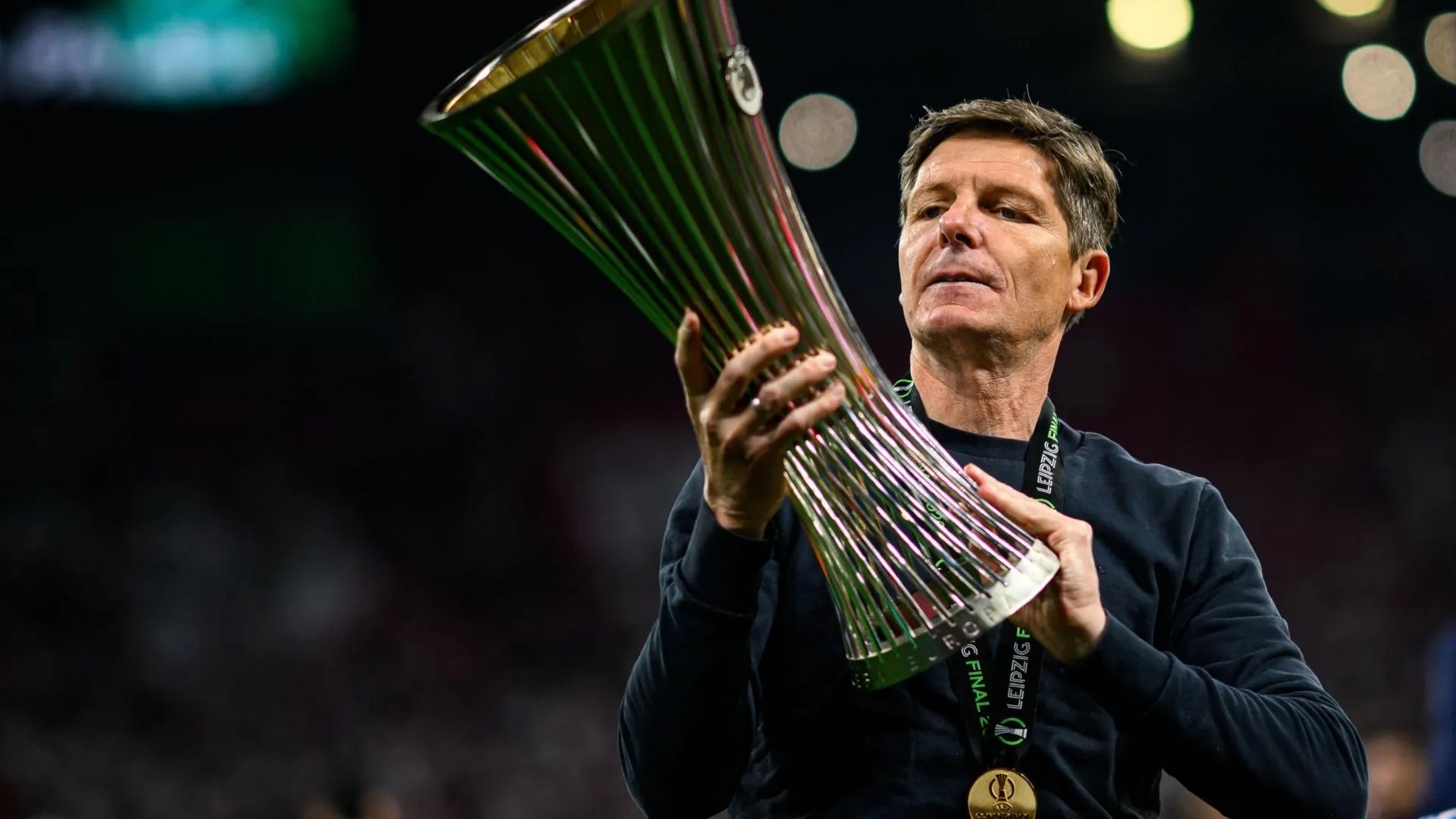
U-turns, tension & trophies - inside 12 glorious months of Glasner
Crystal Palace's Conference League victory comes at the end of a remarkable 12-month period of success under departing boss Oliver Glasner.
When Crystal Palace chairman Steve Parish first met Oliver Glasner in late 2023, he had no idea it would be a meeting that would change the course of the club's history.
It was then sporting director, Dougie Freedman, who had set up the get-together in south London. Freedman had tracked Glasner's career trajectory in the Bundesliga with Wolfsburg and Eintracht Frankfurt and was impressed with what he saw.
Roy Hodgson was in charge at Selhurst Park at the time but there was pressure on the club to make a change. Parish would have usually preferred to appoint a manager with some Premier League history, but there was something about Glasner that impressed the businessman.
By the time Hodgson departed the following February, the wheels were already in motion towards the Austrian's appointment.
Wind forward two and a half years, and Glasner has just led Crystal Palace to Conference League glory with a 1-0 win over Rayo Vallecano in Leipzig.
It will be his final game in charge - but it comes at the end of a scarcely-believable 12-month period of unprecedented success.
"He has got to be one of the best managers Crystal Palace have ever had," said Palace midfielder Adam Wharton.
"He has made a massive difference for how the club looks at competitions. We are not just looking to stay in the Premier League and be in Europe, we are looking to win and be as high as possible."
So how did Glasner lead Palace - without a major trophy in their history at the start of last season - to the FA Cup, Community Shield and Conference League all within the space of 375 unforgettable days?
Crystal Palace win Conference League with superb victory over Rayo
Palace had barely stopped celebrating beating Manchester City in the FA Cup final at Wembley when they were hit with a devastating sucker-punch.
It was early July and south London was eagerly anticipating the prospect of Selhurst Park hosting Europa League football for the first time.
But after Uefa deemed Palace to have breached its multi-club ownership rules - with American businessman John Textor holding stakes in both the Eagles and French side Lyon, who had also qualified for the Europa League - Glasner's team were demoted to the Conference League.
The shock verdict threatened to suck the life out of Palace's success before the new season had even began, with Parish describing it as "probably one of the greatest injustices that has ever happened in European football" before an ultimately unsuccessful appeal to the Court of Arbitration for Sport.
After a 120-year wait for a first major trophy, however, it was going to take more than that to dampen Palace's spirits.
The Eagles showed no signs of feeling sorry for themselves when starting the new season by defeating Premier League champions Liverpool in the Community Shield in the now-familiar surroundings of Wembley.
But the turbulence resumed with the departure of talisman Eberechi Eze, who left for a record fee to join Arsenal after five years, and they nearly also have had to cope with the loss of star defender and captain Marc Guehi had Glasner not intervened.
The England international was all set to rubber-stamp a move to Liverpool until Palace pulled the plug late on deadline day after a move for his intended replacement - Brighton's Igor Julio - failed to materialise.
After Guehi's move to fell through - which would have brought Palace a fee in excess of £35m for a player in the final 12 months of his contract - the lines between Glasner and Parish appeared to blur.
It was reported that the Austrian manager, also in the final year of his own deal, had threatened to quit if Parish had sanctioned Guehi's move to Merseyside.
Glasner was left frustrated that Palace, preparing for their debut European campaign - which would include at least six additional games in the league phase of the competition - seemed willing to sanction departures rather than retain and strengthen the squad they already had.
It was clear tensions were rising behind the scenes at Selhurst Park.
By the team the season had reached the midway point, Palace were in crisis. Only this time, the finger could not be pointed at anyone else but those within the club.
During a wretched run between December and January, Palace's season threatened to unravel, both on and off the pitch.
Palace were in the midst of a 12-game winless run across all competitions, which had seen them slip out of the Premier League's top five and plummet towards the relegation zone.
Continue with Matchday Global
Source: BBC Sport Football